RFM analysis for Customer Segmentation
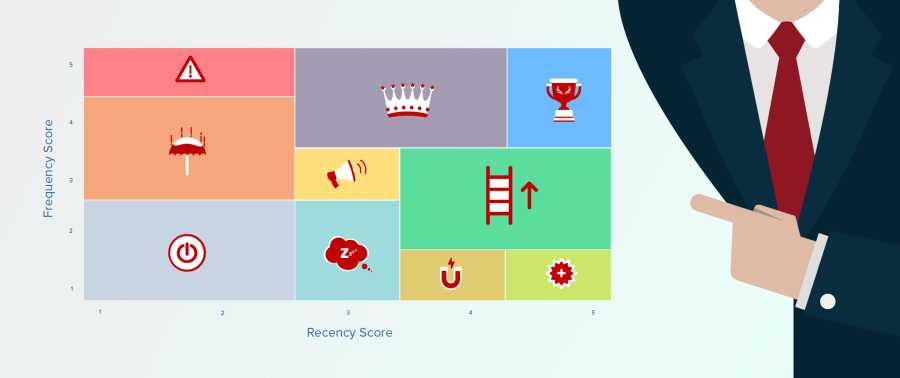
Smart marketers understand the importance of “know thy customer.” Instead of simply focusing on generating more clicks, marketers must follow the paradigm shift from increased CTRs (Click-Through Rates) to retention, loyalty, and building customer relationships.
Instead of analyzing the entire customer base as a whole, it’s better to segment them into homogeneous groups, understand the traits of each group, and engage them with relevant campaigns rather than segmenting on just customer age or geography.
One of the most popular, easy-to-use, and effective segmentation methods to enable marketers to analyze customer behavior is RFM analysis.
What is RFM Analysis?
RFM stands for Recency, Frequency, and Monetary value, each corresponding to some key customer trait. These RFM metrics are important indicators of a customer’s behavior because frequency and monetary value affects a customer’s lifetime value, and recency affects retention, a measure of engagement.
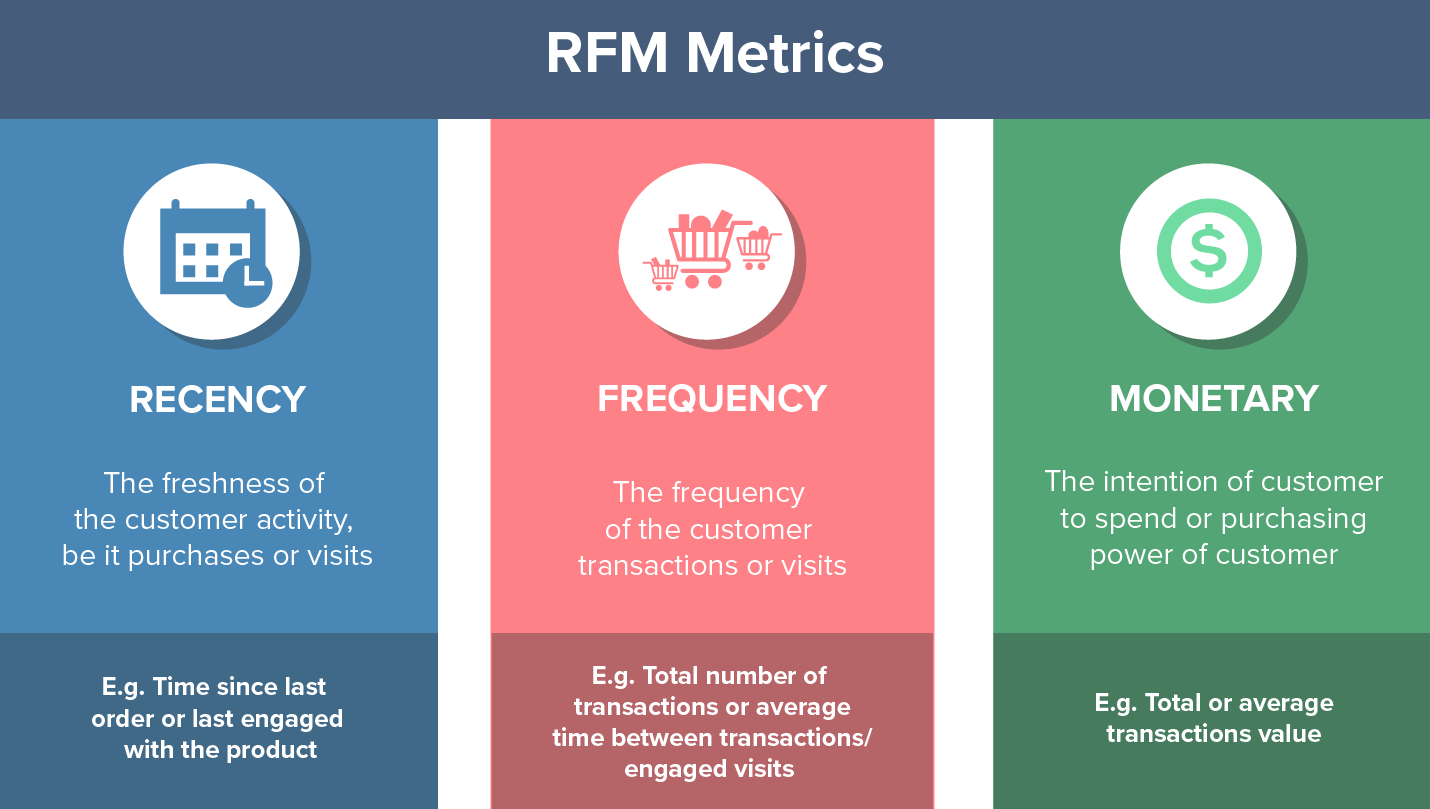
Businesses that lack the monetary aspect, like viewership, readership, or surfing-oriented products, could use Engagement parameters instead of Monetary factors. This results in using RFE – a variation of RFM. Furthermore, this Engagement parameter could be defined as a composite value based on metrics such as bounce rate, visit duration, number of pages visited, time spent per page, etc.
RFM factors illustrate these facts:
- the more recent the purchase, the more responsive the customer is to promotions
- the more frequently the customer buys, the more engaged and satisfied they are
- monetary value differentiates heavy spenders from low-value purchasers
How to Implement RFM Analysis Used in Customer Segmentation
RFM analysis helps marketers find answers to the following questions:
- Who are your best customers?
- Which of your customers could contribute to your churn rate?
- Who has the potential to become valuable customers?
- Which of your customers can be retained?
- Which of your customers are most likely to respond to engagement campaigns?
Let’s demonstrate how RFM works by considering a sample dataset of customer transactions:
| Customer Id | Recency (Day) | Frequency (Number) | Menetary (total) |
|---|---|---|---|
| 1 | 4 | 6 | 540 |
| 2 | 6 | 11 | 940 |
| 3 | 46 | 1 | 35 |
| 4 | 23 | 3 | 65 |
| 5 | 15 | 4 | 179 |
| 6 | 32 | 2 | 56 |
| 7 | 7 | 3 | 140 |
| 8 | 50 | 1 | 950 |
| 9 | 34 | 15 | 2630 |
| 10 | 10 | 5 | 191 |
| 11 | 3 | 8 | 854 |
| 12 | 1 | 10 | 1510 |
| 13 | 27 | 3 | 54 |
| 14 | 18 | 2 | 40 |
| 15 | 5 | 1 | 25 |
Table 1 contains recency, frequency, and monetary values for 15 customers based on their transactions.
RFM Analysis Example
To conduct RFM analysis for this example, let’s see how we can score these customers by ranking them based on each RFM attribute separately.
Assume that we rank these customers from 1-5 using RFM values.
Let’s begin with ranking customers on recency first, as shown in the below table: